
by Grahame Turner

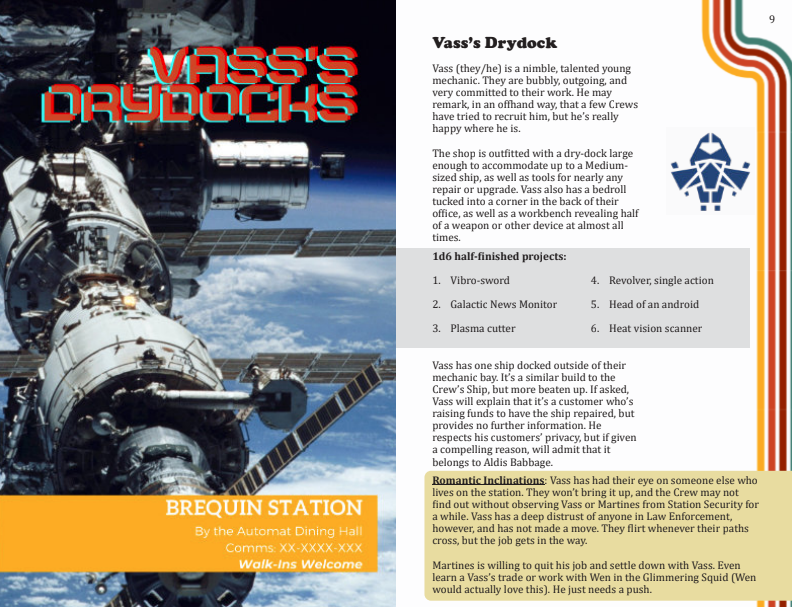
While job hunting for a technical writing position, I learned that applications alone don’t capture the full picture. I wanted a way to show who I was beyond procedures and technical reports. So during last year’s job hunt, I turned one of my tabletop game books, Electric Sheep Shuffle: An Orbital Blues Module, into a writing sample.
It wasn’t just to flex or for shock value; it was a strategic move. My day job in cybersecurity taught me how to communicate complex procedures clearly and precisely, but the Orbital Blues module—where I handled layout, character design, and storytelling—helped me showcase my creativity, artistic range, and voice.
That experience—pairing a game module with technical writing to showcase range—along with insights from fellow game writer Will McDermott, shaped the following tips for building a portfolio that speaks to your strengths.
Be Proud
The tough lesson I had to learn: I need to be proud of my work. I tend to be self-deprecating and minimize my own accomplishments. Given how job interviews are conducted (stateside, anyway), getting hired requires “fake it ‘til you make it,” and I find that exhausting.
When selecting portfolio pieces, start with selections that excite you. Pick more than you need; we’ll whittle them down later. Try to choose pieces that aren’t proprietary or under a Non-Disclosure Agreement (NDA). Consult a lawyer or legal help for specifics on what you can talk about under the terms of any NDAs that apply to your work.
When in doubt, ask for permission to use a piece in your portfolio, but pick a backup in case the answer is “no.”

Being proud of your work is key. If I’m embarrassed about my work, nobody’s going to want to check it out. If I’m excited, I can get other people to be excited about it too.
More on NDAs
Will had more to say about NDAs: “Generally speaking, anything you have written that is under NDA cannot be shared until the game is out. Even then, discussing anything proprietary (like the systems used to create content) will get you into trouble.”
Generally, Will doesn’t name a game he’s worked on until it’s been announced. Until it’s been released, he won’t say more than that he “wrote content” for it. For portfolios, he may then add a link to a product page.
Identify Transferrable Skills
I sometimes forget that creative practices aren’t a single skill. Creation involves numerous skills, and many of those skills can apply elsewhere. Myself and many fellow English majors have found that our most valuable working skill is the ability to write and communicate, which you get from college essays and research projects.
The following examples are skills that your portfolio may help you highlight (thanks again to Will for many of these ideas):
- Writing skills: On some levels, writing games is about (technical) writing, creating a series of procedures that help players craft a play experience. Lore, dialogue, and worldbuilding can act as creative writing samples and elevate the experience beyond rolling dice or pressing buttons.
- Information hierarchy: A TTRPG book is as much a technical document as a how-to guide or a security report. Game books are examples of creative ways to present information and of customizing layout for ease of use.
- Time management: Game writers (both physical and digital) often balance multiple projects with varying deadlines. Having multiple projects in your portfolio speaks to your ability to juggle priorities and get things done.
- Collaboration: Many games are big projects with multiple teams working together on different pieces. Communication and teamwork are essential, and your participation in a team project shows you possess those skills.
- Problem solving: Rare is the project with no obstacles. Think about obstacles you overcame or solutions you suggested that helped you get your project out the door.
- Public speaking: You may need to present your ideas, such as a game idea or a solution to a problem, and back them up with evidence. This skill transfers into any industry.
- Marketing: Will found that many companies he’s worked with were short-handed on marketing copywriters, so he also supported the marketing team with copy. He added, “I have written tons of back-of-the-box copy, promotional one-sheets, ad and teaser video scripts, etc.” This helps show you have additional valuable skills beyond what’s in the job posting.
Take the works you’ve assembled and pick ones that show off those skills. During interviews, think about challenges you overcame or individual tasks you completed. You may need to kill some darlings—you can’t use everything, and your favorite may need to take a backseat to something more demonstrative. (You can still be proud of it.)
You want to fill your portfolio with props to show off during the hiring process, so you can pick anything that seems useful for your performance.
Present the Complete Package
For ESS to work as a sample, it had to showcase something that my other writing samples didn’t. Anyone applying to my kind of job would have blogs, reports, or documentation. I’m no exception; I had plenty. I didn’t think many people would have an adventure module made from scratch in there.
This was an opportunity to stand out. During applications, I called out my portfolio—and specifically my game—in cover letters. I tried to make it more than a gimmick and pointed out the specific skills on display.
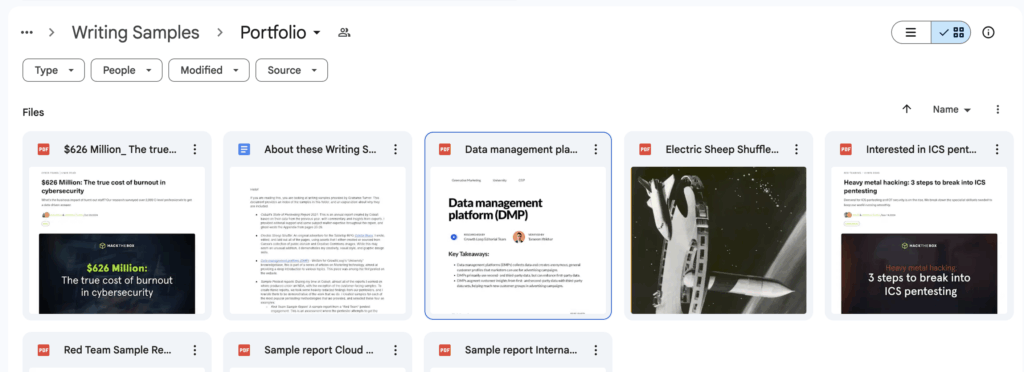
If you’re working with text, like a short story, novel excerpt, or an RPG module, a PDF will do. Many of the job applications I was filling out requested Google Drive folders, so I threw all of my samples in there and added a Readme Google doc in the first slot. You could also make a website or use an online portfolio solution such as Canva or a Wix webpage.
For video games, Will recommended recording videos that include dialogue you wrote and posting those to a YouTube channel, itch.io, or social media. He added, “Scripts can work if you have access to them. So much of video game writing is under strict NDA and created with company-owned and controlled software, so you may just not have access to the files. Thus, playing the game and recording bits you wrote is a good alternative.”
These days, a portfolio could be a physical object or a digital one—you may need to do some research to determine what kinds of portfolio work in your industry. It’s good to have a digital portfolio prepared either way, because it’s easier to share on short notice if an opportunity comes up.
If you’re like me, it’s uncomfortable to be seen, exposed, and centered. The thing that surprised me most throughout this process was how simple it became when I stopped thinking about it as showing off and started thinking about how the work I had done spoke for itself—and me.
Explore more articles from Portfolios in Game Writing
 Grahame Turner is a tabletop RPG designer, podcast script editor by night, and cybersecurity technical writer by day. He publishes games as Understory Games on itch.io. They live in Vermont with their partner and two (very handsome) cats.